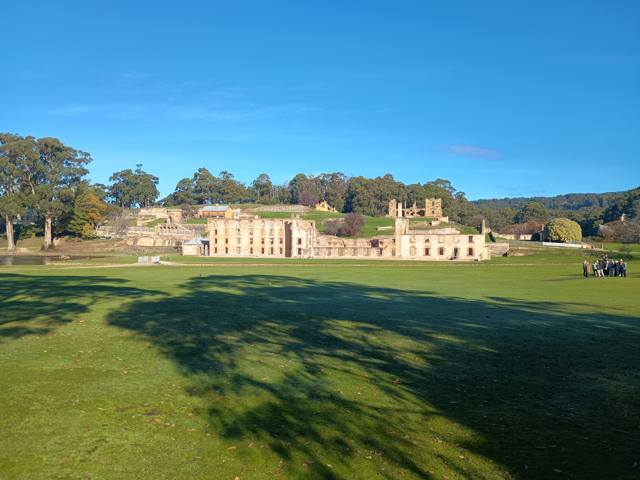
Converting Port Arthur’s flour mill and granary into a penitentiary meant closing a gap in the building. The waterwheel between the mill house and the L-shaped granary was removed. Brick walls and windows matching those beside it filled the space. The granary’s tall loading bays received similar treatment. [2]
The machinery’s two power sources appear in an archival design reproduced in the site’s guide: a treadwheel to one side and a waterwheel to the other, with switchable gears driving millstones on the floor above. [1]
Where is this place?
Port Arthur Penitentiary, Tasmania. This map locates the town or region, not a verified exact historic event site.
Power was only part of the mill’s work. A free miller, appointed in August 1844, supervised its workings and undertook skilled preparation, including cutting grooves in the millstones. Convicts working the treadwheel supplied human power; water provided the other drive. These roles are distinguished in the site’s commissioned conservation plan. [2]
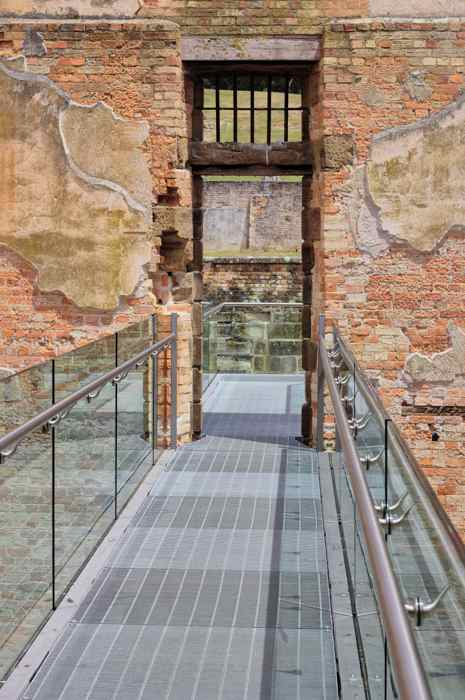
During the 1850s conversion, the building’s floor levels were adjusted to run continuously through it, and a stair tower was added. By 1857, the former mill and granary had become the Penitentiary. [2]