A steam engine can keep moving after its steam-powered working life has ended. At Spotswood, Scienceworks describes demonstrations of the historic engines using compressed air. The machines no longer pump sewage. Their movement now helps explain a job they used to perform. [1]
But the retirement of the machinery was not the retirement of the whole place. Museums Victoria records that pumping stopped in September 1965 while sewage continued beneath the site towards Brooklyn and the treatment works at Werribee. A preserved engine and a working sewer can occupy different layers of the same address. [2]
Where is this place?
Spotswood Pumping Station, Scienceworks, 2 Booker Street — geographic context. This map locates the town or region, not a verified exact historic event site.
The lift in a longer journey
Spotswood was a lifting point, not the destination for treatment. Sewers brought waste from Melbourne’s central business district and surrounding inner suburbs. The pumps raised it to the start of the Main Outfall Sewer at Brooklyn; from there, gravity carried it onward to Werribee. Melbourne Water’s history makes that sequence clear. [3]
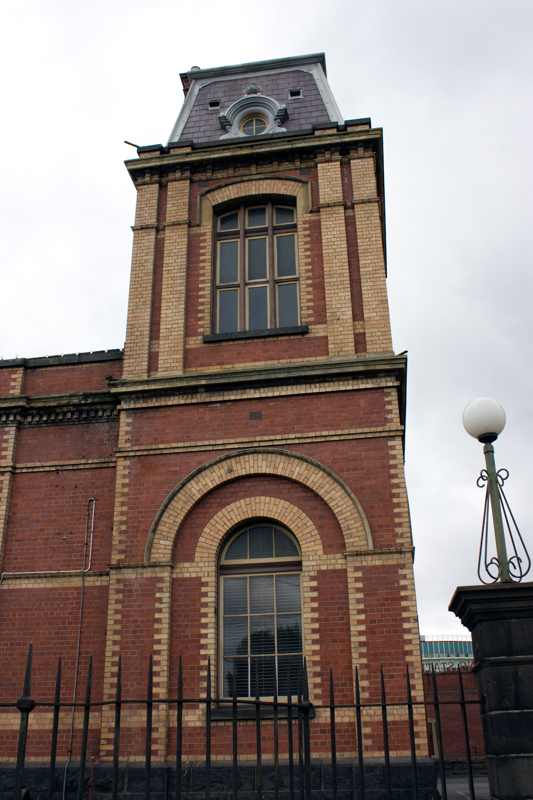
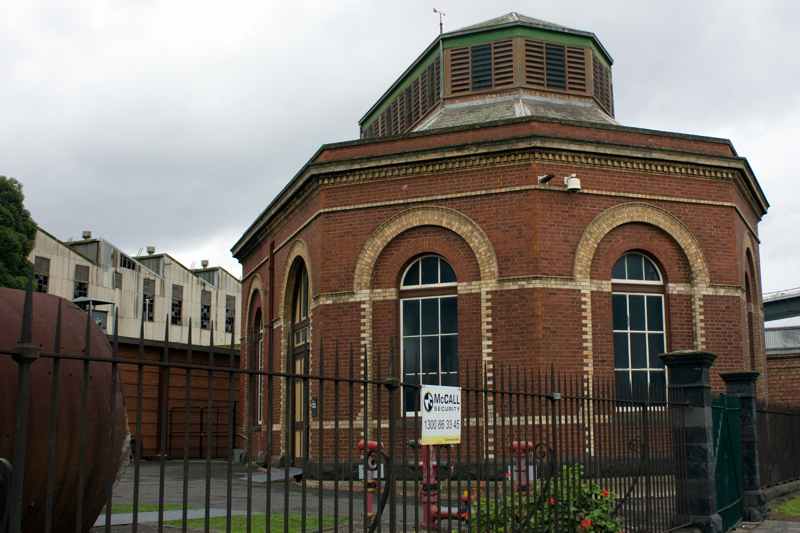
The ornate buildings contained different stages of the work. The museum’s account identifies two engine houses, each backed by a boiler house and coal bunker. Polygonal straining houses removed debris that could obstruct the pumps. Rexness’s 2010 photographs show a many-sided brick building with tall windows and one of the complex’s elaborate towers. Neither exterior view reveals the whole system below. [4–6]
The engines did not all retire together
Electric pumps first arrived in 1921. By 1925, according to Melbourne Water, electricity handled most of the daily flow. Steam had not vanished immediately: the museum records intermittent use of the steam pumps until 1947. The pumping station itself continued longer. [3, 4]
That was a workplace as well as a collection of machines. The museum describes round-the-clock operation in three shifts. At one stage, the afternoon shift’s finish moved from midnight to eleven, so workers could reach Spotswood station for the last train home. Even a service that could not close had to accommodate the journeys of the people running it. [4]
Melbourne Water attributes the eventual replacement to increased demand after the Second World War and corroding rising mains. The new Brooklyn pumping station took over in September 1965. This was not simply a decision to exchange steam for electricity; that transition had begun decades earlier. [3]
Useful after the pumps stopped
The Board of Works continued using Spotswood as an engineering workshop and deep-sewer maintenance depot into the 1980s. Museum ownership followed in March 1989; Scienceworks opened in February 1992. There was no single step from active sewage plant to museum exhibit. [2]
Those overlapping endings make the surviving station more than an impressive shell. Pumping, maintenance, sewer conveyance and public explanation have different histories here. Compressed air can make an old engine’s movement visible without restoring its old duty. And a building can become heritage without making everything beneath it a relic.