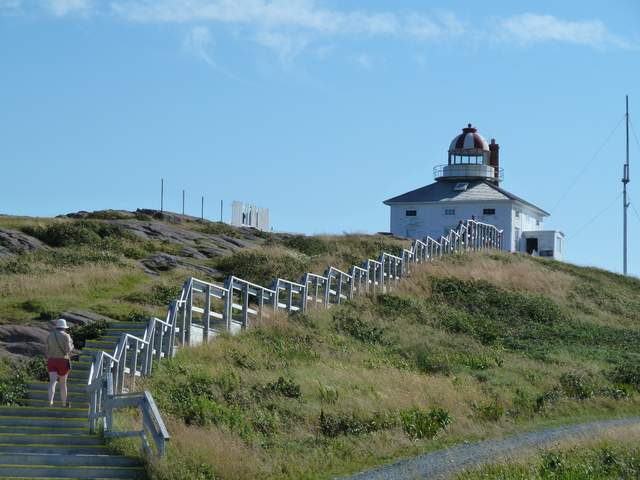
Cape Spear’s first light was already secondhand. When the Newfoundland lighthouse began operating in September 1836, its apparatus had come from Inchkeith, Scotland, where it had been used since 1815. Seven Argand burners supplied the light; curved reflectors concentrated it. Clockwork turned the supporting frame to give a 17-second white flash followed by 43 seconds of darkness. [1]
Across the Atlantic, Inchkeith was moving from reflectors to lenses. Engineer Alan Stevenson later described that change in his 1848 account of lighthouse work. He recorded the new Inchkeith light’s public debut in October 1835 and explained how its proximity to Edinburgh made the effects of the change convenient to observe. [2]
Where is this place?
Cape Spear Lighthouse, Newfoundland and Labrador. This map locates the town or region, not a verified exact historic event site.
At Cape Spear, local builders Nicolas Croke and William Parker had constructed a stone tower surrounded by a timber residence. The tower rose through the middle of the house: living quarters and the light occupied one building above the approaches to St. John’s harbour. [3]
A different apparatus made a shorter journey in 1955. The glass dioptric system installed at Cape Spear in 1912 moved into a new tower nearby. Before that move, its source of illumination had changed from oil to acetylene in 1916 and to electricity in 1930. This was the later lens system, not the original Scottish reflector assembly. [1]
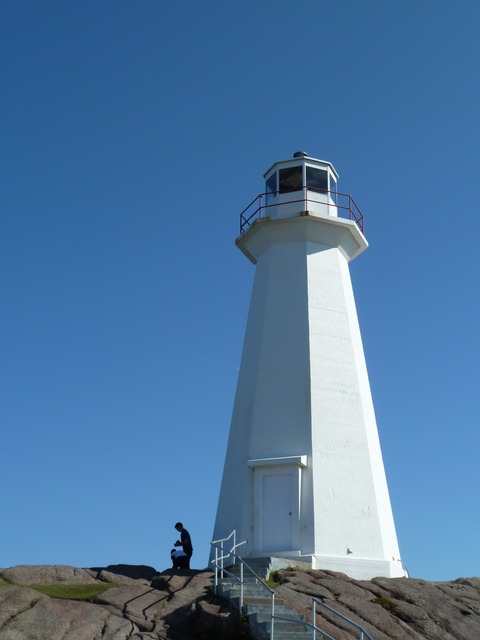
Parks Canada subsequently restored the older building to its early nineteenth-century appearance. Its heritage record separates the stone tower, metal lantern and wooden house, and identifies the central staircase connecting the residential rooms with the light above. [3]