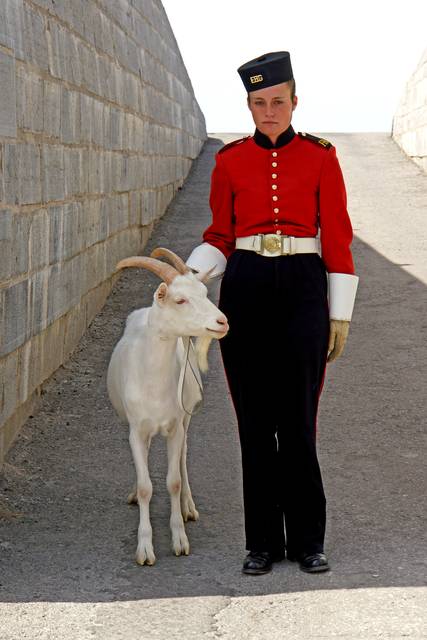
David the goat had a name on the back of the photograph. Several people around him did not. In November 2019, Fort Henry Guard Club archivist Daniel Rose put the picture before readers of The Guardsman and asked for help identifying the people still missing from its record. [1]
It was photograph 24 in an album presented to Ronald L. Way on Founder’s Day, 27 July 1973. The writing on the back named some guardsmen, including Doug Thompson with David and George Post. A check of the Guard Master List confirmed three men’s names. Three other guardsmen and two visitors remained unidentified in the newsletter’s account. [1]
Where is this place?
Fort Henry, Kingston. This map locates the town or region, not a verified exact historic event site.
David also appeared in another of the club’s records. Its May 2020 brochure captioned a 1953 photograph of Goat Major George Post and David I with members of the St. David’s Society. Collecting records and memorabilia was one of the club’s stated tasks, alongside volunteering at the Kingston fort’s programmes and ceremonies. [2]
The name continued as the animals changed. In May 2003, fort manager John Robertson announced a June parade marking 50 years since the presentation of the mascot. David VIII was due to retire and David IX to join the Guard. Former guards were invited, with particular encouragement for past goat majors. The season’s exhibition, Pride and Passion, paired the Guard’s 65th anniversary with the mascot’s 50th. [3]
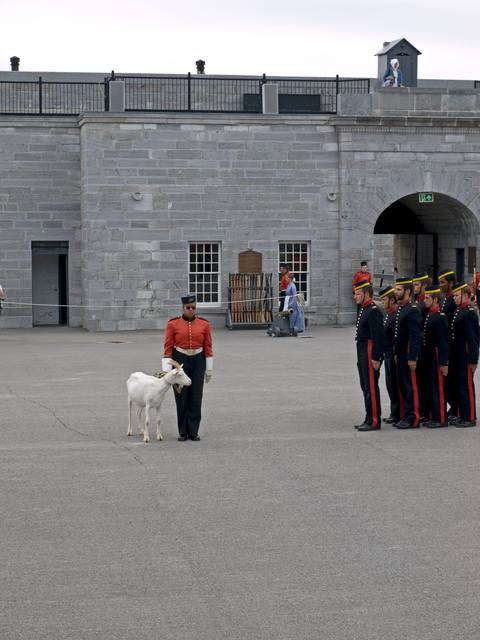
By 2019, the collection had an itemised list and accession numbers, but Rose still had photographs needing names and context. Readers were invited to identify people or contribute memories of the scenes. The goat’s name was already in the record; the appeal concerned the company he had kept. [1]