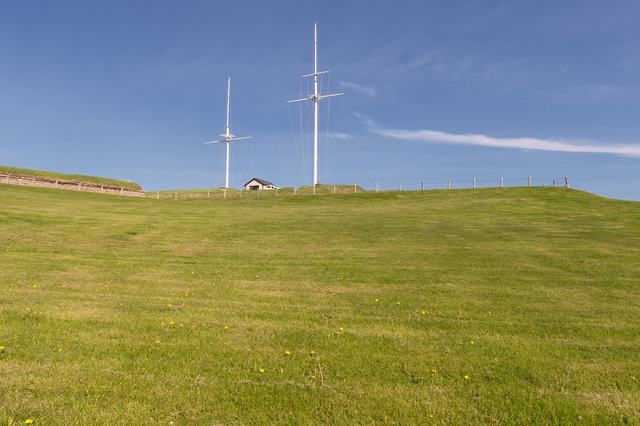
A Halifax merchant who wanted a company flag flown from the Citadel had to supply it. The British army operated the commercial signal mast. Local almanacs and newspapers published guides to reading the signals overhead. [1]
The mast could report how many vessels were approaching, their nationality, where they had come from and the direction of their arrival. Parks Canada’s account says that this gave merchants four or five hours to prepare. In the 1850s, a smaller yardarm was added to distinguish steamship movements. [1]
Where is this place?
Halifax Citadel National Historic Site. This map locates the town or region, not a verified exact historic event site.
The work fell within a much larger artillery assignment. The Halifax Citadel Regimental Association records that the city’s gunners rarely numbered more than 350, yet had responsibility for the whole defence complex. Non-commissioned officers trained infantry and militia in artillery drill. The Royal Artillery also staffed the signal post and fired the noon and evening signal guns. [2]
The commercial mast survived the arrival of the electric telegraph and telephone. Halifax’s Chamber of Commerce paid for its upkeep from 1868 into the 1930s; the army continued operating it as a courtesy into the 1950s. The replica masts now support a heritage interpretation programme, with many displayed commercial signals referring to merchant houses that no longer exist. [1]
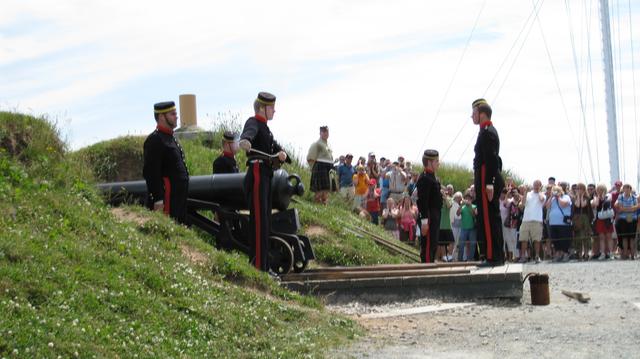
The gun, too, is a reproduction rather than an original survivor: Parks Canada identifies the Noon Gun as a copy of an 1809 twelve-pounder. It is also used for artillery salutes. The mast signals and the gun demonstration are separate parts of the Citadel’s recreated working day. [2][3]