More water is part of the solution at Peterborough’s lift lock. Add it to the upper boat chamber and that chamber becomes heavier. Through the hydraulic connection beneath the structure, its descent pushes the other chamber upward. The boats travel with their water rather than waiting for a conventional lock chamber to fill or empty around them. [1]
Water in the wrong place presents a different problem. In its 2026 repair programme, Parks Canada identified leaks into the lift lock’s interior, where sensitive mechanical and electrical equipment needed protection. The contrast is not between an old machine and its natural enemy. Water is both the means of doing the work and something the structure must control. [3, 4]
Where is this place?
Peterborough Lift Lock, Lock 21 on the Trent–Severn Waterway — geographic context. This map locates the town or region, not a verified exact historic event site.
The small detail behind the great lift
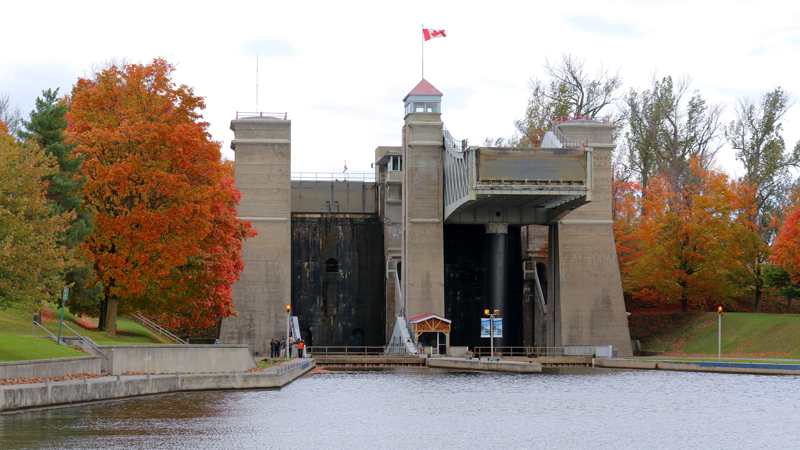
Opened in 1904, the lock overcame a change in level of 19.8 metres. Its tall concrete towers and elevated steel chamber make the scale easy to appreciate. But a description preserved in the Richard Birdsall Rogers collection at Trent University Archives directs attention to less conspicuous parts. [1, 2]
The 1905 text describes an extra depth of “about ten inches” in the upper chamber as the source of the lifting power. It also explains how an inflated hose made the junction between a movable chamber and the canal reach watertight. An automatic compressor supplied the air. The large moving structure depended on a carefully sealed meeting point. [2]
That account is not a specification for today’s repairs. It shows that keeping water where it belonged was already part of the original engineering story—not a concern discovered only after the landmark grew old.
An exterior is not a diagnosis
Robert Linsdell’s photographs, taken on 8 October 2014, give two different views of the structure. One places a raised chamber and its supporting ram among concrete towers and autumn trees. The other looks closely at a wall, an arched opening and a metal gate above. These are dated exterior records, not evidence identifying the leaks described twelve years later. [6, 7]
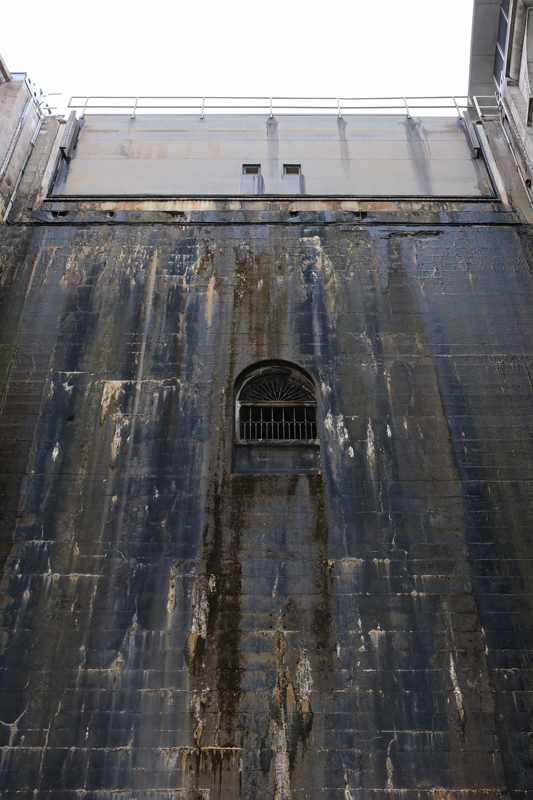
Parks Canada’s February 2026 announcement grouped lift-lock infiltration repairs with canal-embankment rehabilitation and replacement of the Maria Street Swing Bridge. The project’s subsequent questions and answers explain the threat to interior equipment. Those documents establish the stated reason for the work; they do not establish that the sealing has since been completed. [3, 4]
More than the part that rises
The federal heritage description includes underground machinery, canal approaches and embankments as well as the towers, chambers and ornamental details. It also recognizes the lock’s continuing function within the waterway. Preservation here is not confined to keeping a familiar silhouette. [1]
Read beside the early description, the repair programme gives the landmark a less spectacular but equally important story. Raising a chamber makes the machinery’s work visible. Keeping water out of the wrong spaces helps that work continue. The view from the canal shows one achievement; the seal belongs to another.