Beaver Marsh’s recovery involved work that a beaver could not do: loading discarded material into a canoe. A photograph described by Summit Metro Parks records Sierra Club volunteers, including Elaine Marsh, collecting trash from the ponds in June 1984. Water was already part of the cleanup scene—not simply the reward waiting at its end. [1]
An auto-repair and salvage site became a wetland in Ohio’s Cuyahoga Valley National Park. But was it simply a dry junkyard that animals reclaimed after people left? [2, 3]
Where is this place?
Beaver Marsh, Cuyahoga Valley National Park, Ohio — public wetland context, not a former family home or exact garage footprint. This map locates the town or region, not a verified exact historic event site.
The cars had another meaning
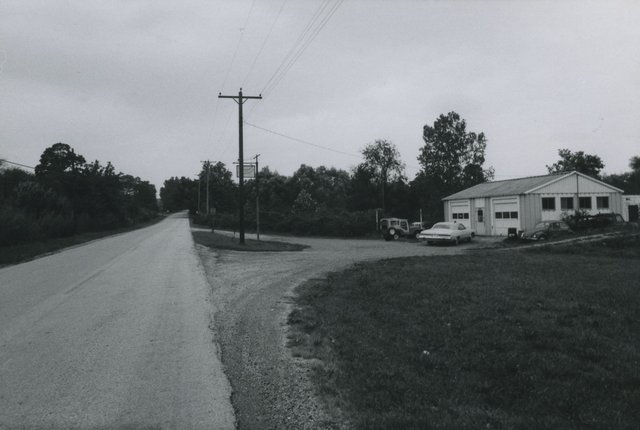
An NPS photograph of Burl Tonkin’s Riverview Road garage, dated approximately to the early 1980s, shows a roadside workshop with vehicles outside—a business, not vacant land. [2]
In a 2023 oral-history interview, relatives Kim Michalec and David Brewer remembered the old Volkswagens differently from someone encountering them only as debris. Brewer recalled Tonkin looking through cars outside when he needed a part that was not in the building. The interviewer described this as inventory; Brewer agreed. Their account also distinguishes the drier garage area from wetter ground farther back. These are family recollections, not a hydrological survey, but they complicate the shorthand of one uniform junkyard. [3, 00:32–35 and 00:43–47]
That distinction does not make the later cleanup unnecessary. It explains why the same objects could mean working stock in one account and material to remove in another. A restoration story can acknowledge both without turning a former resident into its villain.
Removing things, holding water
The NPS records federal land purchases and building removals in the late 1970s and early 1980s. A parking lot was considered, not built. Returning beavers built dams and lodges, established by the 1985 inventory. Meanwhile, Sierra Club volunteers and the NPS hauled away car parts, bed springs and other trash in 1984. The processes overlapped. [2]
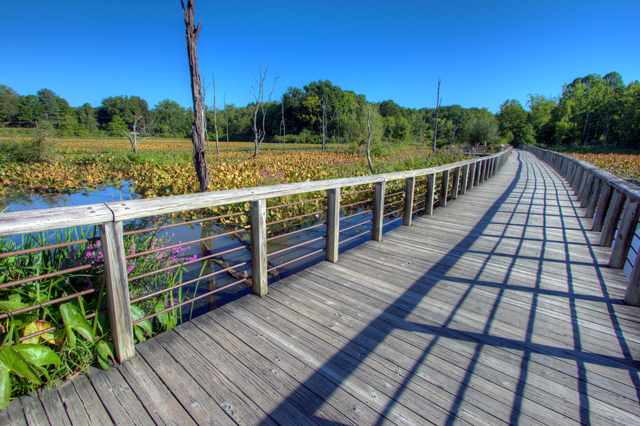
The canoe detail matters here. Summit Metro Parks’ account of Elaine Marsh’s conservation work places her cleanup in the Ira beaver ponds, with collected trash carried in the boats. It supplies a concrete human action alongside the beavers’ alteration of water levels. Neither task was a substitute for the other. [1]
The park credits restored water levels with awakening dormant seeds. Hauling out bed springs did a different job. Wetland recovery needed more than letting plants grow. [2]
A parts inventory, a cleanup crew, beaver dams: this landscape did not change in one moment when nature took over and people ceased to matter.