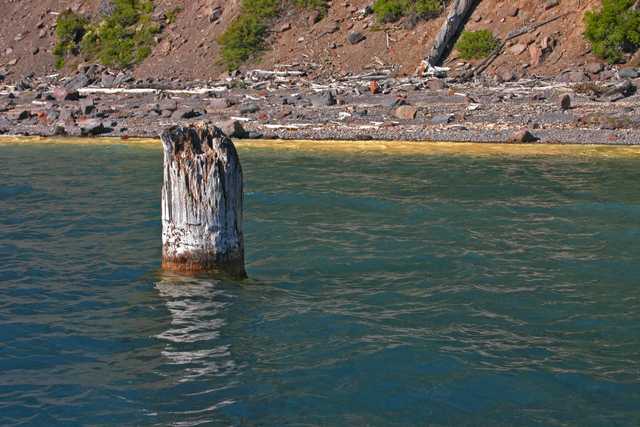
The floating log in Crater Lake covered at least 62.1 miles during a three-month observation project in 1938. The important words are “at least.” Park naturalists calculated the distance by connecting recorded positions with straight lines. They had not tracked every turn. [1]
Wayne E. Kartchner and John E. Doerr Jr. recorded 84 locations between July and the end of September. Sometimes they made two sightings in a day; sometimes they lost the log for several days when neither the sightseeing launch nor observers on the rim could locate it. It also spent periods lodged near shore. [1]
Where is this place?
Crater Lake National Park. This map locates the town or region, not a verified exact historic event site.
Their report treated the Old Man of the Lake as evidence of moving air. Most observations through mid-September placed it in the northern half of the lake. The authors inferred a prevailing southerly wind, deflected into eddies and cross-currents by the enclosing walls. On August 6, it covered 3.8 miles between morning and evening sightings. [1]
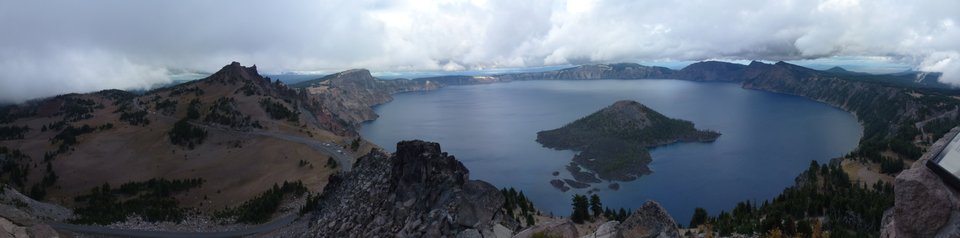
The tracking project was not the discovery of the log. Kevin Grange’s 2011 account in National Parks traces an earlier written description to geologist Joseph Diller in 1902, recalling a sighting six years before. Grange also interviewed park biologist Scott Girdner, who distinguished an old tree from a long stay in the water: initial carbon dating put its age at least 450 years, but its floating time was uncertain. [2]
The Park Service still identifies the upright log as mountain hemlock while acknowledging that nobody knows when it entered the lake. Its explanations for remaining upright are presented as theories, not a solved mechanism. [3, 4]
The 1938 observers could be more precise about their last sighting: September 30, off the south shore, below Sinnott Memorial. [1]