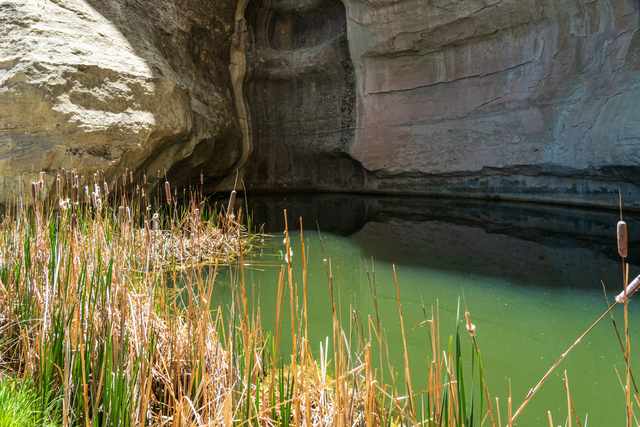
Jerome Greene’s 1978 historic-structure report treated El Morro’s pool as a changed reservoir, not an untouched water hole. The report’s published abstract describes an earlier basin that was smaller and shallower, with a narrow edge people could walk around. By the time Greene studied it, a concrete dam held back a much larger body of water.[1]
The pool beneath the New Mexico sandstone bluff had supplied ancestral Puebloans and later travellers long before park management began. In the 1920s, custodian Evon Vogt deepened and dammed it to improve the water supply for visitors, farmers and ranchers. The surrounding ranches continued drawing water there until 1939.[2]
Where is this place?
El Morro National Monument, New Mexico. This map locates the town or region, not a verified exact historic event site.
A rockfall in 1942 wrecked that dam and filled the basin with debris. Dredging during the repairs exposed evidence of still older efforts to dam the water. Vogt’s work had altered an already-used place, not begun its history of modification.[2]
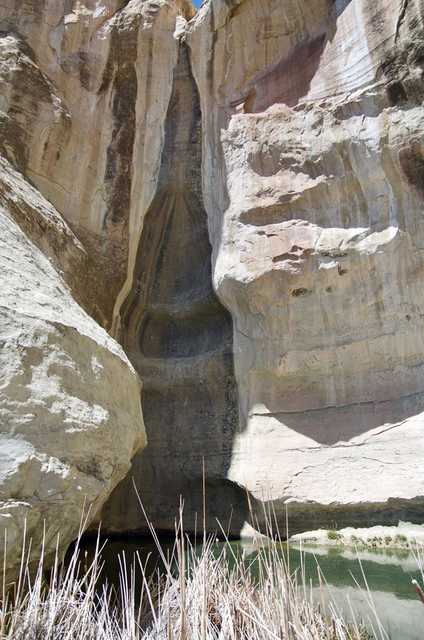
The enlarged pool remained the park’s main water source until 1961. That year, a well was dug on the monument’s north side.[2]