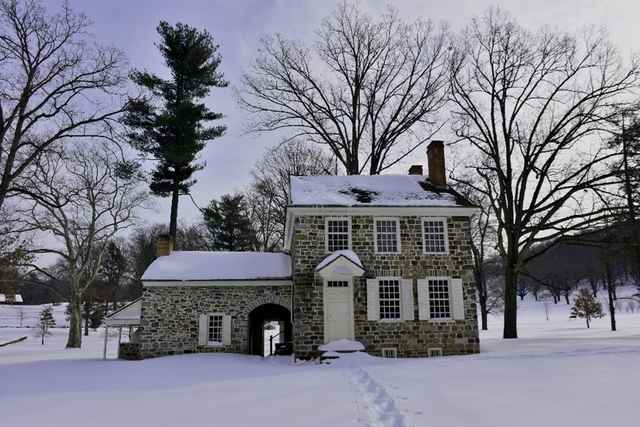
Martha Washington did not send Mercy Otis Warren a floor plan. In a March 1778 letter from Valley Forge, she described the general’s cramped quarters and said that a log cabin built for dining had made them more tolerable. More than two centuries later, archaeologists had to look for that extra room without knowing its dimensions from her account.[1][2]
The ground behind Washington’s headquarters had been rearranged repeatedly. The excavation team’s June 2009 blog warned that fill might contain material disturbed by a nineteenth-century house addition, an 1887 interpretation of the dining hut, or earlier archaeological digging. Old objects alone did not guarantee an undisturbed encampment surface.[3]
Where is this place?
Washington’s Headquarters, Valley Forge, Pennsylvania. This map locates the town or region, not a verified exact historic event site.
After finding no evidence of the cabin in 2009, the team shifted its search south the following summer. A narrow patch of darker soil became the important find. The project’s June 2010 account interpreted it as a filled trench where a sill log—the timber at the base of a wall—had once rested. The log itself was gone. The National Park Service’s later summary describes a shallow trench about 24 feet long, parallel to the headquarters, suggesting the dining cabin’s location.[2][4]
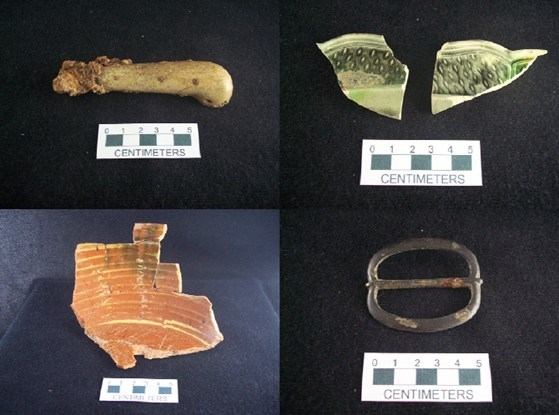
The work did not turn every promising mark into part of Washington’s household. Further targets identified by ground-penetrating radar were investigated in 2011; none proved to date to the encampment. The dining-cabin interpretation rested on a particular trench, not on a general assumption that everything beneath the headquarters belonged to its most famous winter.[4]