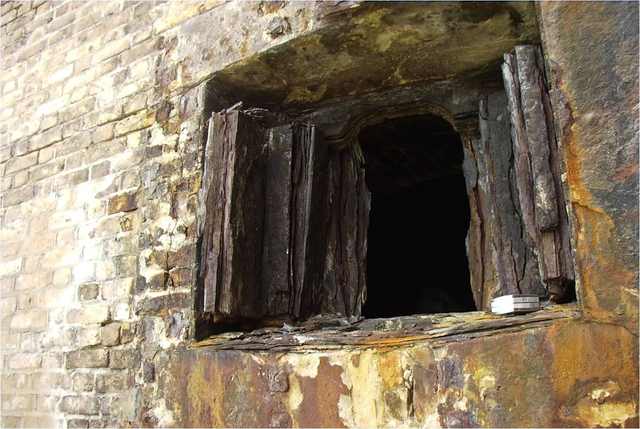
In a 2011 National Park Service film, exhibit specialist Kelly Clark describes two cannon openings at Fort Jefferson. One still contains its corroded iron shutter assembly. At the other, workers have removed the iron and cut holes into sound masonry to anchor a replacement arch. The repair reaches behind the visible brick face. [1]
The shutters were meant to protect gun crews at the Florida Keys fort. Gases released when a cannon fired would push the balanced doors open; they would then swing shut. Embedded between the fort’s core and its outer brickwork, the iron became a different sort of moving part as it rusted and expanded. It forced the surrounding masonry apart. [2]
Where is this place?
Fort Jefferson, Dry Tortugas, Florida. This map locates the town or region, not a verified exact historic event site.
Removing that metal meant taking brickwork down first. A January 2014 Park Service bulletin describes cleaning usable original bricks and setting them aside. Salvaged bricks and new replacements would both go back into the walls. [3]
The replacement shutter components did not all repeat the original material. Stone & Lime, the contractor for work on Front 3 in 2013–14, records using cast-concrete components while reconstructing the cannon openings and repairing the outer wall with natural cement. The familiar opening could return without putting the same rusting iron back inside it. [4]
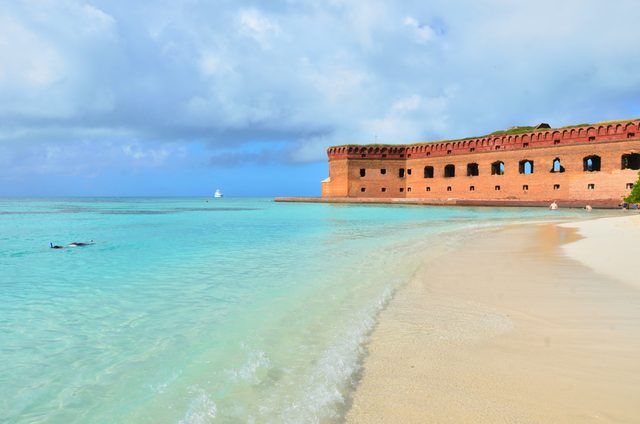
The 2014 bulletin also records how this remote masonry job was staffed: crews stayed for three weeks, then spent a week off the island. Stone & Lime budgeted for a resident chef to prepare meals and maintain the living quarters, leaving the masons’ off-duty time free from that work. [3]