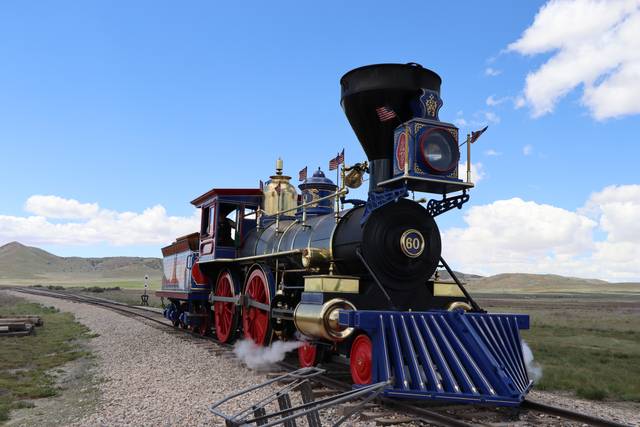
Golden Spike’s 2026 calendar set aside Tuesdays when one of its two replica locomotives would not run. Jupiter’s boiler washes were scheduled for May 26, June 23, July 21, August 18 and September 15. No. 119’s fell a week later. The paired engines at Promontory Summit, Utah, had separate maintenance appointments. [1]
They are not the machines preserved from the meeting of the railroads in 1869. The originals were scrapped. In 1975, O’Connor Engineering Laboratories in Costa Mesa, California, began making replacements without the original plans. Engineers worked from an 1870 design handbook and measurements taken from enlarged photographs of the engines in 1869. The National Park Service’s account records more than 700 drawings and two years spent preparing them. The replicas entered service on May 10, 1979. [2]
Where is this place?
Golden Spike National Historical Park, Utah. This map locates the town or region, not a verified exact historic event site.
Both burn fuel rather than merely imitate a steam locomotive’s movements: wood for Jupiter, coal for No. 119. They are engines without passenger cars, not a train offering rides. [3]
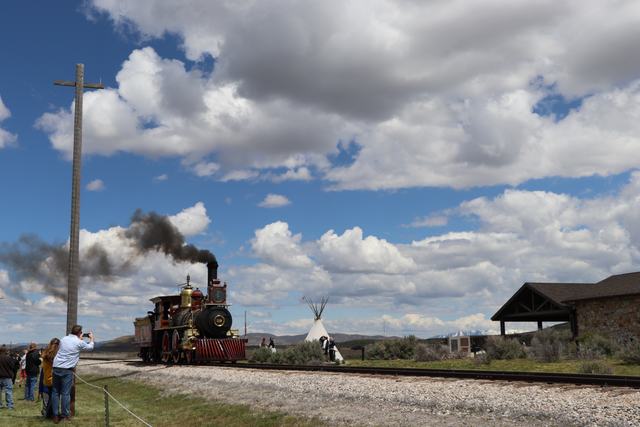
The wash calendar made their working demands public. It listed the engines as out of operation for routine maintenance, with returns scheduled for 2 p.m. the following Wednesday, subject to mechanical issues. Those entries were plans, not a record proving that every return happened on time. [1]
Alongside the timetable, a Park Service photograph identifies one of the jobs involved: removing accumulated soot from the smokebox. [1]