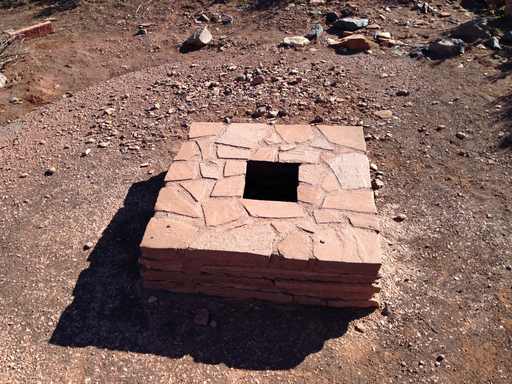
The opening beside Wupatki Pueblo can draw air into the ground as well as blow it out. It is one of several vents in the fractured rock of this part of northern Arizona, connected to underground spaces whose full extent has not been mapped. [1][2]
A drop in outside air pressure lets relatively higher-pressure underground air move outward; rising outside pressure can reverse the flow. Temperature also matters. The Museum of Northern Arizona describes a typical clear summer day’s pattern of nighttime intake and daytime outflow, not a direction fixed for every visit. [2]
Where is this place?
Wupatki Pueblo, Arizona. This map locates the town or region, not a verified exact historic event site.
The square masonry surrounding the pueblo’s opening is a later addition. The American Southwest Virtual Museum’s trail guide records that the Park Service enclosed it after the 1965 ballcourt excavations. Wupatki remains an ancestral place for living Indigenous communities. [3][4]
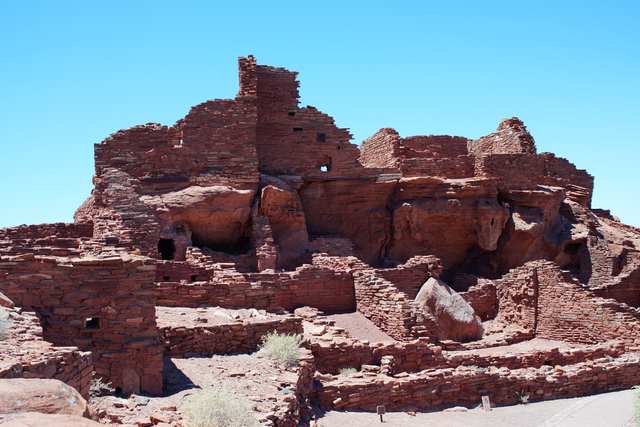
Elsewhere in the monument, at a different opening called Blowhole No. 1, Flagstaff High School science teacher Robert Schley recorded the phenomenon in 1960. His instruments traced airflow, temperature, humidity and atmospheric pressure continuously for more than a day. A joint RAND–Museum of Northern Arizona investigation followed in 1961. [5]
Measuring the underground wind required some conspicuous equipment. At three study openings, researchers fitted bent conduits to turn the air horizontally: their wind gauges needed vertical axes to work reliably. They covered the sites with tents to protect the instruments and keep ordinary surface wind from interfering. [5]