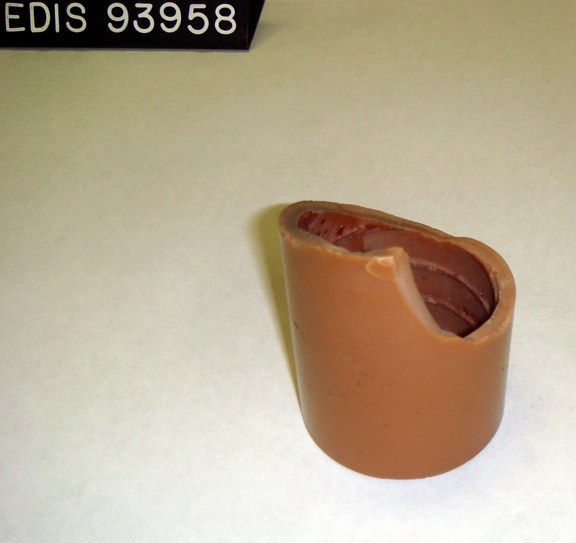
The announcement gives Altenkirchen, 14 January 1889. But the family greeting preserved on wax cylinder EDIS 93958 belongs to January 1890, according to historian Stephan Puille’s study of Theo Wangemann’s European recordings. The cylinder is in the collection at Thomas Edison National Historical Park in West Orange, New Jersey. Its probable addressee was Wangemann’s brother Adalbert in Chicago. [1]
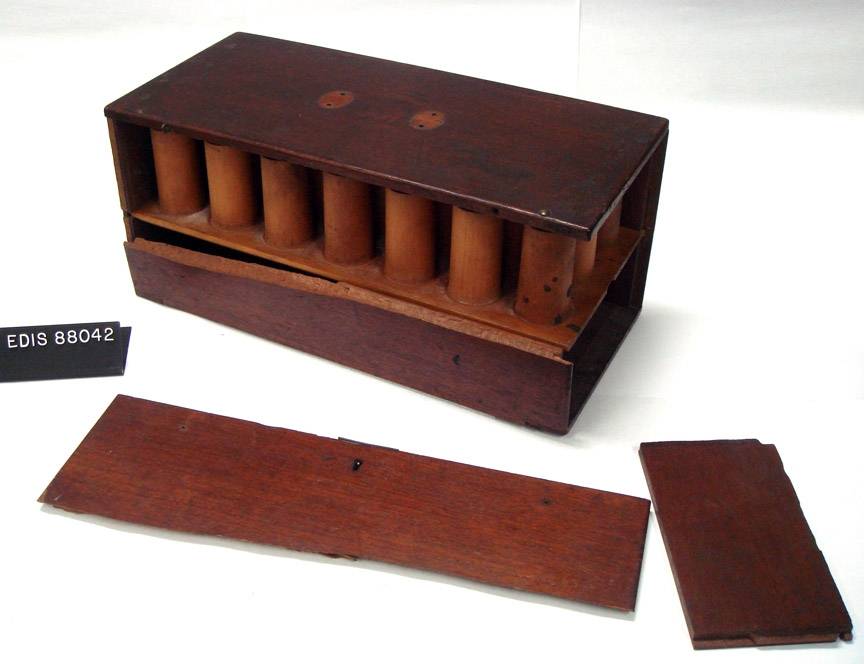
Wangemann carried a wooden box of recordings during his 1889–90 travels. In 1957, museum curators catalogued it after finding it in a wall cabinet behind Edison’s cot in the laboratory library. An individual inventory in 2005 counted seventeen brown-wax cylinders, some badly broken. The names Wangemann and Edison were scratched into the lid, but no list identifying the recordings had survived inside. [2]
Where is this place?
Thomas Edison National Historical Park — collection context. This map locates the town or region, not a verified exact historic event site.
In 2011, the park’s sound-recording curator, Jerry Fabris, digitized twelve cylinders using an Archéophone playback machine. Five could not be digitized because pieces were missing. The park’s winter 2012 newsletter reported that the twelve recordings had been released at the end of January. [2][3]
Listening supplied information the box could not. Puille and fellow sound historian Patrick Feaster worked on identification and historical research. Playback speed was itself uncertain: record producer Ward Marston helped establish the pitch of musical recordings and identified compositions by Chopin and Ambroise Thomas. The work involved both deciphering voices and finding the right musical speed. [2]
For the Altenkirchen family, the phonograph carried an invitation. In the published transcript, Ottilie Klaube, called Odo, recalls Christmas with Theo and his wife Anna and hopes Adalbert will visit. Julius Klaube adds his own wish to see him again. Puille identifies the final voice only as probably one of the children. [1]